
We Depend on Care. It's Time to Build the System That Reflects That Truth.
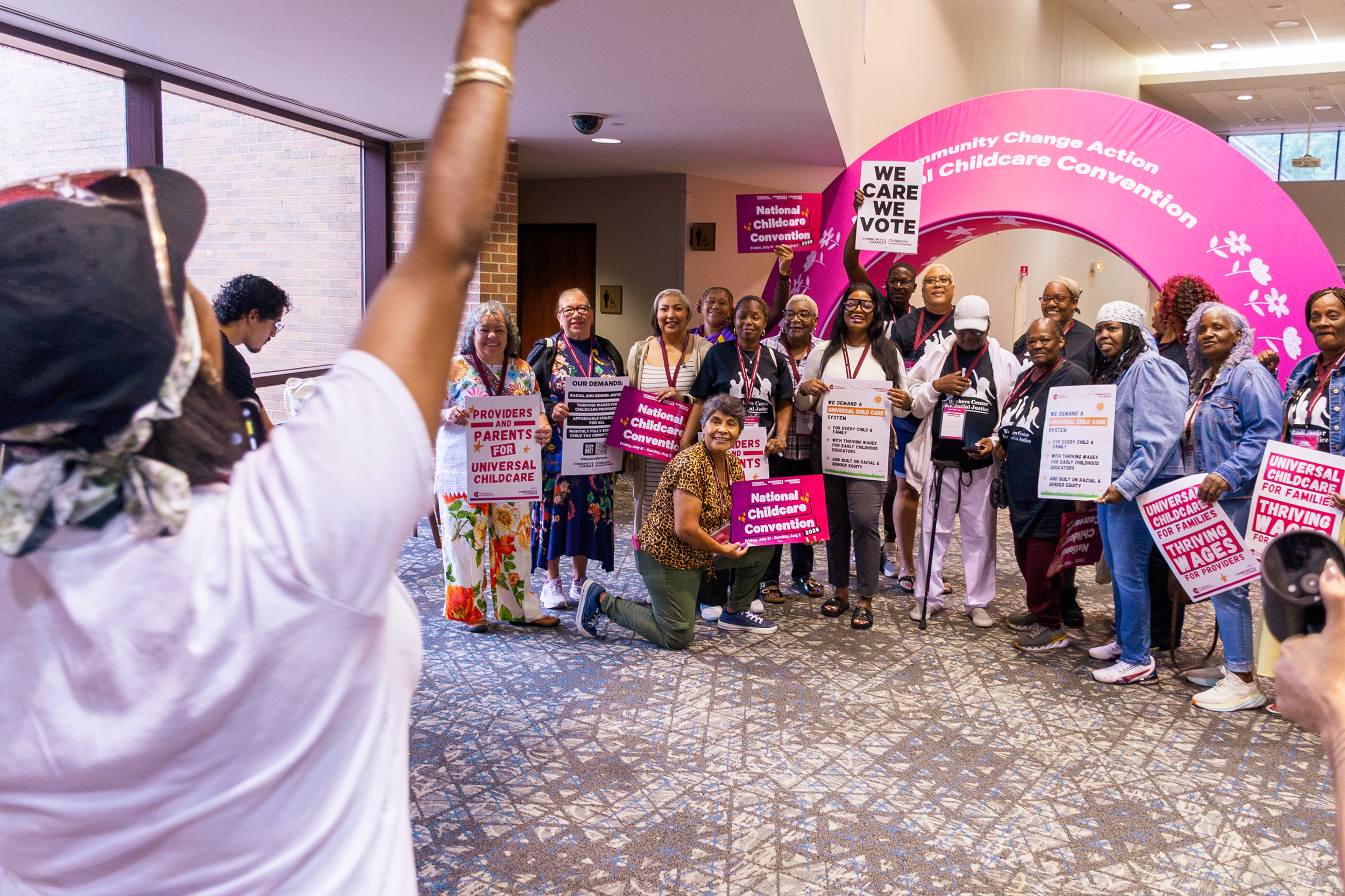
When I looked out across the room on the first day of Community Change Action's first-ever National Childcare Convention, it felt like I was seeing the dream that we've worked toward for years: 1,300+ parents, providers, organizers, and allies from 39 states, Washington, D.C., and Puerto Rico, all in one place, ready to do what no one else is going to do for us: win universal childcare.
As our co-president Lorella Praeli said in the room, we are collectively dependent on care, but we ask families and providers to pay for it individually. Our childcare movement is saying: no more. We demand a system that cares for every child and every family, and provides thriving wages and benefits for providers.
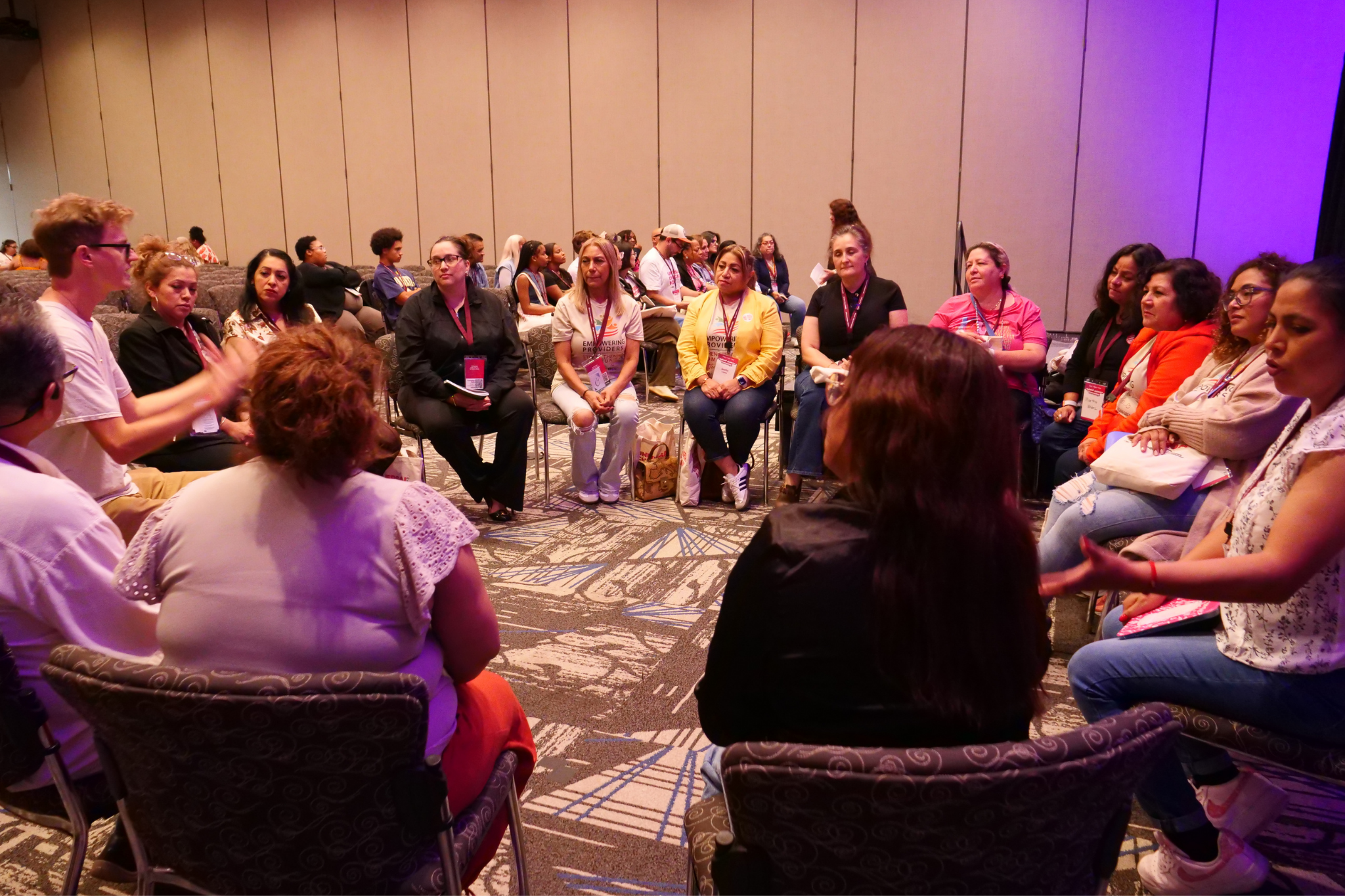
At our convention, the people who carry our care system on their backs day after day were able to meet and strategize together. For the first time in a long time, Black, Brown, and low-income caregivers – mostly women – were seen, supported, and heard both on center stage and in small groups. Over three days, parents, providers, and allies got trained on strategic campaigns, power-building, and escalating this fight ahead of the 2026 Midterms. Childcare is no longer a private family issue — it's the political battle defining this time.
Trump is gutting childcare funding, attacking Black and immigrant providers, and forcing families to pay more for care than even rent. It's a system failing everyone it touches. And it reveals the choice in front of us: a nation that cares for its people, or one that rules through fear.
Our childcare crisis is not an accident – It’s by design. As Community Change Action co-president, Dorrian Warren, explained: “It was built on the stolen labor of Black women — forced, under slavery, to rock somebody else’s baby while somebody sold their own. When slavery ended, care work was one of the only doors open to Black women — and the rules kept it underpaid and unprotected. And when immigrant women came to do this work, the old racial rules were simply handed down: no protections, no recognition, plus the weapon of fear. New workers. Same design. Never repealed.”
So we’re building the power to create a new system – by us, for us.
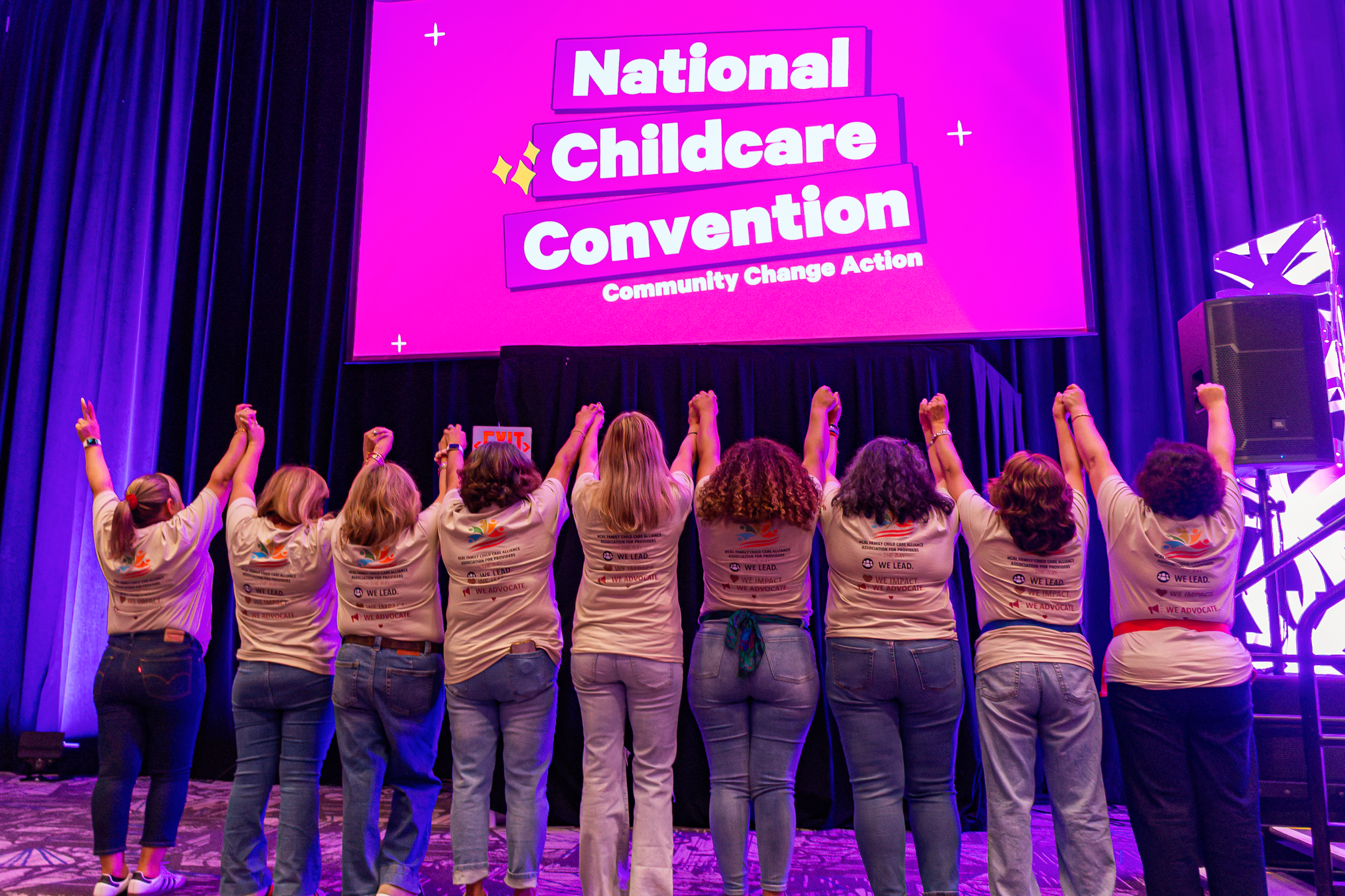
The thousands of attendees are now committed to implementing a 2026 midterms strategy, hosting events to promote universal childcare in their communities, and launching Community Change Action Childcare Changemaker Chapters nationwide to bring many more people into the movement.
Cale Nelson, a parent from Minnesota and a Childcare Changemaker, put it plainly: "I've done the math on childcare too many times — between rent, groceries, and what it costs to leave my children with someone who loves them, something always has to give. Universal childcare isn't a nice-to-have to me. It's the ultimate thing my family — and families like mine — need to stay afloat."
Meanwhile, for the providers, the math is just as brutal. Emma Biggs, who has worked at a center-based program in North Carolina for 35 years, added: "Parents can't pay more, and providers can't make less — that is the simple truth of where we are. We're trying to keep our childcare system from collapsing."
Parents and providers have been placed on opposite sides of an equation that neither created nor can solve alone. No more. Every family deserves care, and every provider deserves dignity. That is not too much to demand. But just because we are right doesn’t automatically mean we will win. We have known the truth about the care crisis for years. We have told our stories repeatedly. People who hold power can hear our stories, clap, and walk away without doing anything unless we have the power to stop them.
Building that power is what our convention was meant to do. Together, we will bridge the gap between the country we live in and the country that we deserve.
Jennifer Wells is the Director of Economic Justice at Community Change/Action, where she leads the organization’s work to advance policies and practices that improve the material conditions of low-income communities. Jennifer was born and raised in New Orleans and deeply understands the social and economic issues that impact our communities.